
NEWS
The Truth Behind the Headlines: Trump’s Political Moves Revealed”

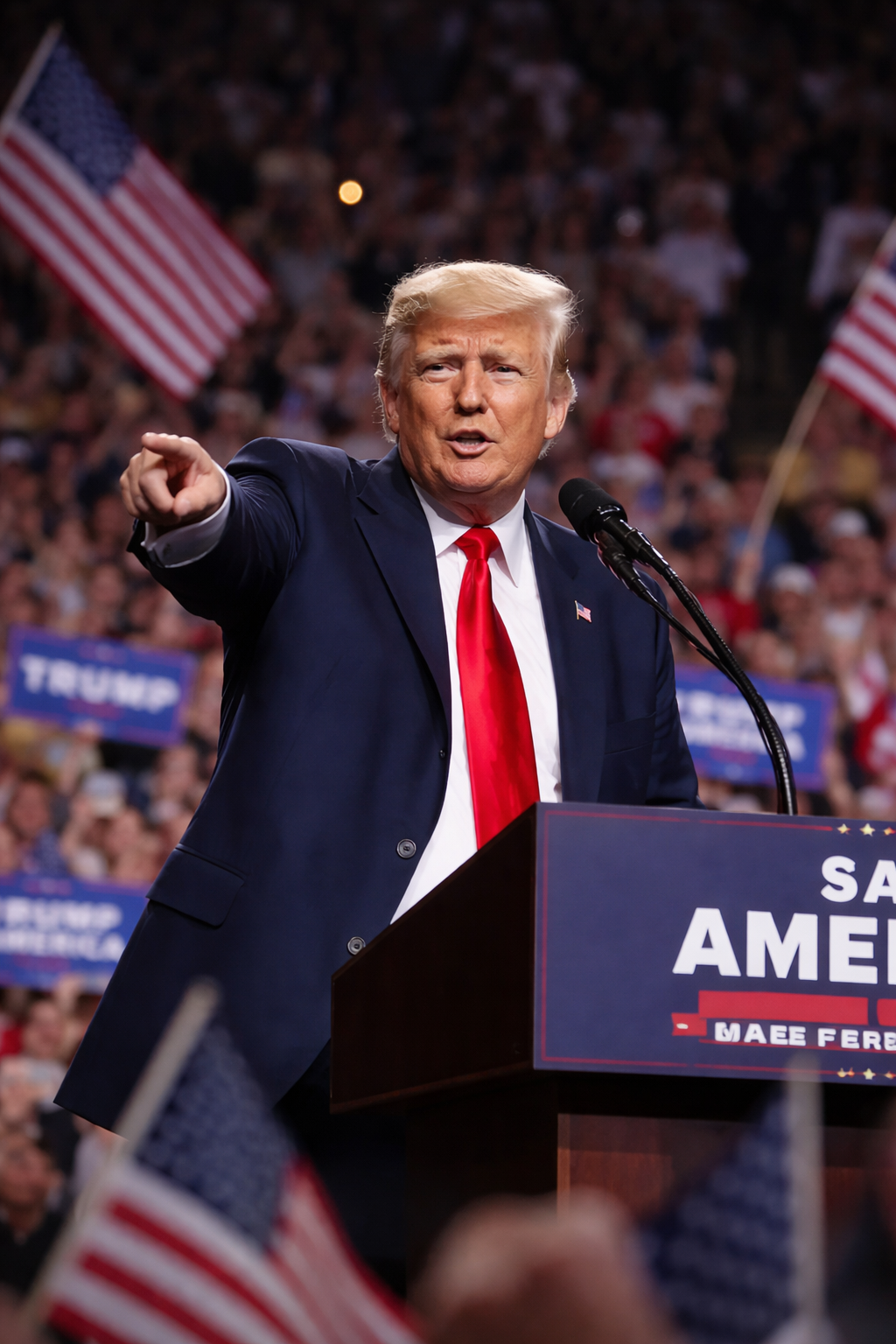
Donald Trump rarely leaves the headlines. Whether through courtrooms, campaign rallies, or late-night social media posts, his presence continues to dominate American political discourse. But beyond the constant churn of breaking news and heated commentary lies a more calculated reality: Trump’s political moves are often less spontaneous than they appear—and far more strategic.
To understand Trump’s enduring influence, it’s necessary to look past the surface-level drama and examine the methods behind the message.
Controlling the Spotlight
One of Trump’s most consistent political tactics is his ability to command attention. In a media landscape driven by outrage, clicks, and immediacy, Trump understands that visibility is power. Provocative language, sweeping claims, and personal attacks are not accidental—they ensure that he remains the focal point of political conversation.
Even negative coverage works in his favor. By staying constantly in the spotlight, Trump forces opponents and journalists alike to react to him, rather than set their own agendas. In modern politics, attention often outweighs approval, and Trump has mastered that equation.
The Outsider Narrative
Despite having served as president, Trump continues to portray himself as an outsider battling a corrupt political establishment. This framing resonates strongly with voters who feel alienated from traditional institutions and distrust long-standing political elites.
Criticism from the media, courts, or political rivals is often reframed as evidence that he is challenging entrenched power. In this narrative, Trump is not a politician under scrutiny—he is a disruptor being punished for refusing to conform. The result is intensified loyalty among supporters who see attacks against him as attacks against themselves.
Legal Trouble as Political Fuel
Trump’s legal challenges dominate headlines, but politically, they function as more than liabilities. Each indictment or investigation becomes an opportunity to rally supporters, raise campaign funds, and reinforce claims of political persecution.
Rather than stepping back, Trump frequently escalates his rhetoric, positioning legal accountability as a partisan weapon. This approach transforms courtroom drama into campaign momentum, blurring the line between legal reality and political theater.
Reshaping the Republican Party
Trump’s influence extends well beyond his own campaigns. Through endorsements, public criticism, and sheer political gravity, he has reshaped the Republican Party in his image. Candidates seeking success in Republican primaries often adopt his language, policies, and confrontational style.
Those who challenge him risk public rebuke and political isolation. Loyalty, rather than ideology, has increasingly become the defining currency within the party—a shift that reflects Trump’s lasting grip on its direction.
Messaging Over Policy
While Trump’s policy positions—on immigration, trade, foreign policy, and nationalism—remain important, it is often the messaging that defines his political impact. His slogans and simplified narratives prioritize emotional clarity over detailed policy explanations.
This approach makes his positions easily digestible and repeatable, even when critics argue they lack nuance. For supporters, the appeal lies not in policy white papers, but in the promise of strength, certainty, and confrontation.
A Divided Media Reality
Trump’s political legacy cannot be separated from the fractured media environment that surrounds him. Supporters and critics often consume entirely different versions of events, shaped by partisan outlets and algorithm-driven platforms.
As a result, the same headline can signal heroism to one audience and danger to another. Facts become secondary to interpretation, and political identity hardens along informational lines.
Beyond the Headlines
The truth behind the headlines is not simply about controversy—it’s about transformation. Trump has altered how political power is built, maintained, and displayed in the modern era. He has shown that constant visibility, emotional connection, and defiance of norms can be as influential as traditional governance.
Whether admired or condemned, Trump remains a defining figure not just because of what he does, but because of how effectively he turns reaction into relevance.
And as long as attention remains the most valuable currency in politics, the headlines are unlikely to move on.

HAPPENING LIVE: North Korean leader Kim Jong Un has reignited a fierce war of words with the White House, issuing a personal and highly provocative critique of President Donald Trump’s mental fitness.

WARNING AMERICA! Iran is Threatening Assassination on Trump. This is scary. IRAN IS THREATENING ASSASSINATION ON TRUMP

UPDATE: Israel’s National Security Minister Itamar Ben-Gvir has sharply criticized international human rights organizations, accusing them of abandoning neutrality during the ongoing regional conflict. In a strongly worded statement, he questioned why global institutions appear, in his view, to be largely silent about the impact of the war on Israeli civilians.

HAPPENING NOW: 🇮🇳🇷🇺 India who decided to support Israel and the US instead of it’s BRICS partners was buying cheap discounted oil from Russia.

BREAKING NEWS: The ‘Israeli’ military on Friday accused Iran of using missiles equipped with cluster warheads in its strikes on ‘Israel’, launched in response to an ongoing military campaign by ‘Israel’ and the United States against the Islamic Republic since Feb 28

Kim Jong Un Issues Stark Warning: Harm North Koreans in Iran and Pyongyang Joins the War” 🚨

BREAKING NEWS: The remarks signal that the Trump administration may seek influence over Iran’s political transition following recent military operations.

Pentagon Bombshell: Defence Secretary Pete Hegseth Claims Iran Attempted to Assassinate Donald Trump, Vows Brutal US Response

BREAKING NEWS: ‘Iran is run by religious fanatics’…. U.S. commanders across more than 30 military bases told troops the Iran war is part of “God’s plan” and linked it to “Armageddon.”

BREAKING: Trump Urges Iran’s Military to Lay Down Arms — “Accept Immunity Now or Face Certain Death”

Happening now: You keep hearing that Russia and China are “10 feet tall.” That their missiles are unstoppable. Their air defenses are impenetrable. Their tech is years ahead. Cool story.
